
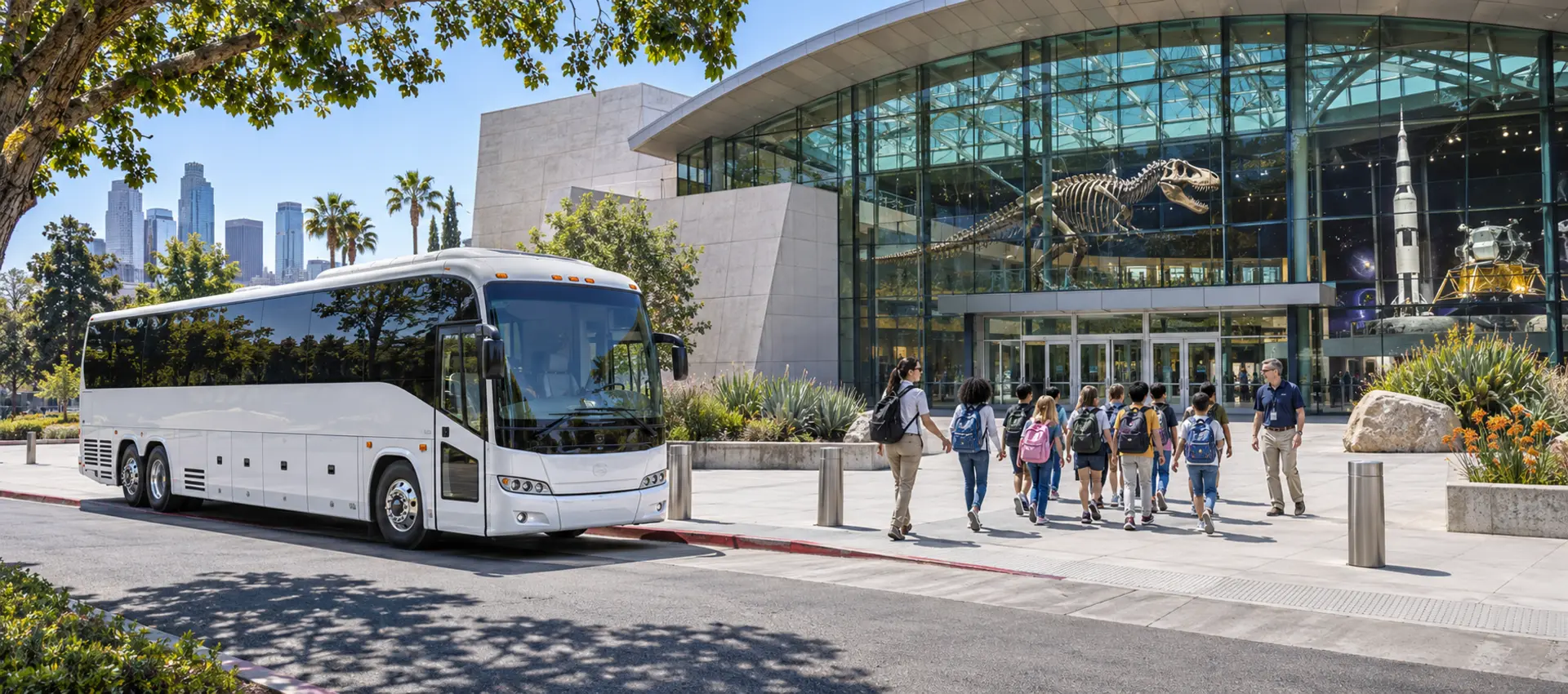
Coordinating student transportation carries significant daily responsibility. Each departure must align with class schedules, venue reservations, supervision plans, and firm return times. Bay Area traffic and travel distances add operational details that schools must address before students board.
A charter bus for schools can bring the group, route, schedule, and transportation plan into one coordinated service. Administrators still need an accurate passenger count, complete itinerary, suitable vehicle, and clear requirements for students, staff, and chaperones. Careful planning also supports effective communication between school personnel and the transportation team.
With these details established early, educators can focus on supervision and the purpose of the trip while transportation professionals manage the planned journey from pickup through return.
Reliable Transportation for Bay Area School Groups
Quality Assurance Travel’s school transport service supports field trips, athletics, campus shuttles, school events, and organization travel for groups of 20 or more passengers. Its service area includes the San Francisco Bay Area, San Jose, Silicon Valley, Santa Clara, Santa Cruz, the East Bay, Marin County, and Monterey. This regional coverage helps schools coordinate local outings and longer trips within the surrounding area through one transportation plan.
School Transportation Services Built Around the Itinerary
School transportation may support educational outings, athletic competitions, extracurricular activities, organization events, and other scheduled programs. Each trip begins with its specific operational requirements rather than a generic route. Planners should provide the group size, destination, schedule, pickup points, return time, and every potential stop.
The logistics team uses these details to prepare a complete itinerary for trip execution. Route arrangements depend on the submitted requirements and confirmation during planning.
Field Trips, Athletics, and School Events
A field trip may require arrival before a reserved program, while athletic travel may need space planning for participants and equipment. School events can involve students, employees, chaperones, or organization members traveling together. Provide all departure and return requirements at the outset.
Include venue access instructions and any intermediate stops that the transportation team must evaluate.
Recurring and Campus Transportation
Quality Assurance Travel also describes daily student shuttles as an available use case. Recurring and campus transportation requires a clear schedule for each pickup point, stop, departure, and return. Schools should disclose schedule variations during planning.
This allows the proposed itinerary to account for the full transportation pattern rather than relying on assumptions about daily operations.
Safety, Punctuality, and Trip-Day Support
School transportation planning should include documented driver qualifications, applicable vehicle standards, schedule commitments, and access to operational assistance. These elements help administrators evaluate how the service will support their duty of care.
Driver and Vehicle Standards
Ask Quality Assurance Travel to confirm the assigned driver’s commercial qualifications, passenger endorsement, screening, and any school-trip-specific certification required for your itinerary. Confirm the assigned vehicle’s inspection status and suitability for student transportation. Review supporting documentation through your school’s established approval procedures.
Coordination When Plans Change
Fixed bell schedules, activity start times, and venue reservations make punctual transportation essential. Quality Assurance Travel provides an on-time guarantee and 24/7 live support as part of its school-specific safety and support practices. If a school anticipates schedule uncertainty, the coordinator should identify it before the trip.
During service, live support provides a contact point when an approved plan changes. School personnel should communicate revised timing, locations, or stop instructions promptly so the transportation team can assess the request and coordinate the next steps.
Choosing the Right Vehicle for Your School Group
Vehicle selection starts with the total number of students, employees, and chaperones who will travel. School and organization service applies to groups of 20 or more passengers, while the listed vehicle capacity sets an upper passenger limit for planning purposes. The itinerary also affects suitability.
Trip planners should disclose luggage, athletic equipment, mobility and accessibility requirements, and requested onboard amenities when seeking a quote. The transportation team can then confirm whether a specific option meets the trip requirements and is available for the requested date.
| Vehicle option | Listed passenger capacity | Planning consideration |
|---|---|---|
| 56-passenger coach | 56 | Confirm suitability, availability, luggage space, and school-trip requirements. |
| 47-passenger coach | 47 | Include all staff and chaperones in the count. |
| 40-passenger executive coach | 40 | Confirm amenities and equipment storage. |
| Shuttle bus | 28–32 | Confirm route range and accessibility requirements. |
Capacity alone does not confirm availability or suitability. A group should choose a vehicle only after the provider reviews the passenger count, itinerary, destination, equipment, and any requirements that need specific confirmation.
What to Provide When Requesting a School Charter Quote
An accurate quote depends on complete trip information. Before requesting a proposal, prepare:
- Total passenger count, including students, staff, and chaperones
- Travel date
- Pickup and drop-off locations
- Destination
- Departure schedule and required arrival time
- Return timing
- Trip purpose
- Planned intermediate stops
- Equipment or luggage requirements
- Accessibility needs or requested amenities that require confirmation
The planning process has three stages. First, share the complete trip details. Second, receive a tailored, transparent proposal with no hidden fees.
Third, confirm coordinated execution and receive the complete itinerary for the trip. Charter pricing varies according to trip details, so the information above helps the transportation team prepare a relevant proposal. Qualified school groups can request a personalized quote or consultation after confirming their passenger count and core schedule.
Review the resulting proposal and itinerary against school approval requirements before finalizing transportation.
A Coordinated Approach to School Travel
Bay Area schools arranging transportation for 20 or more passengers should prioritize appropriate capacity, documented safety practices, a complete itinerary, and clear trip details. Early disclosure of schedules and special requirements helps Quality Assurance Travel evaluate the trip accurately. A coordinated plan gives administrators, educators, and organization leaders a defined framework for managing travel from departure through return.
Plan Your Group Transportation
Ready to organize your trip? Request a personalized QAT charter quote for 20 or more passengers. Include your full itinerary, passenger count, and any accessibility or equipment needs. For booking policies, see QAT’s frequently asked questions.