
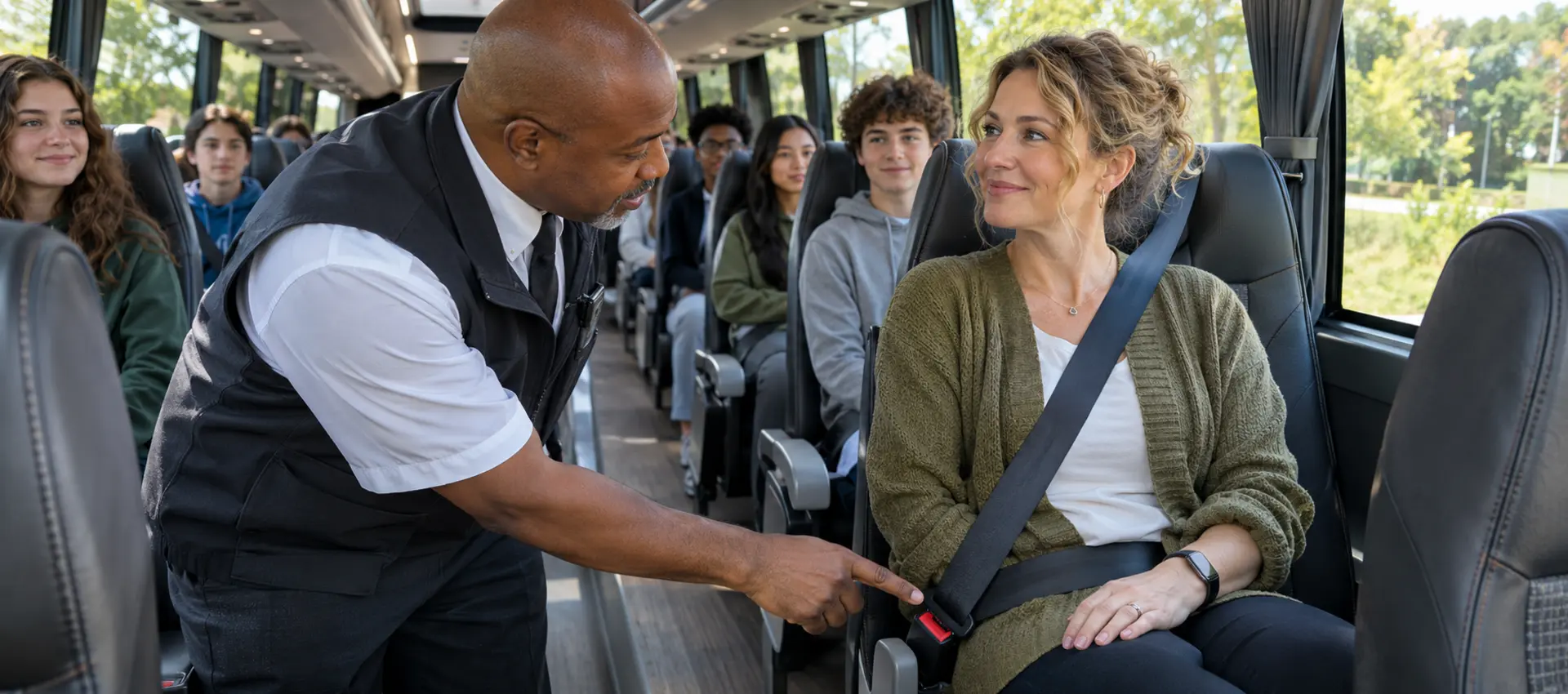
Safe, Structured Transportation for School Travel
Student transportation requires careful safety oversight and precise logistical planning. Booking a charter bus for schools involves more than choosing a vehicle. Schools must coordinate passengers, supervision, routes, schedules, equipment, and emergency procedures. This guide covers field trips, athletics, competitions, campus travel, and recurring transportation, with practical steps for planning each journey.
Quality Assurance Travel has served Bay Area schools since 2002, giving the company more than two decades of school transportation experience. Its services support planned student travel through structured scheduling, qualified drivers, vehicle inspections, and trip-specific coordination.
School administrators, teachers, athletic directors, activity coordinators, and parent organizers can use this guide to assess provider credentials, choose a suitable vehicle, organize supervision, prepare for emergencies, coordinate routes, and request an accurate quote.
When Schools Should Use a Charter Bus
A school charter bus is professionally arranged group transportation for a planned student trip or recurring route. The school defines the schedule, passenger group, stops, destination, and supervision plan with the transportation provider. This arrangement differs from trips that rely on multiple personally driven vehicles, where transportation is divided among individual drivers.
Quality Assurance Travel supports educational field trips, sports events, band and choir travel, club outings, campus tours, daily school shuttles, and inter-campus transportation. Its services also cover field trips, athletics, campus shuttles, and school events for groups of 20 or more passengers.
The company’s School Transport service covers daily school runs and field trips for districts, private schools, and parents. Planning accounts for the students’ age group, security needs, schedule, pickup arrangements, and destination requirements.
Field Trips and Educational Excursions
Field trips often have firm arrival windows, designated entrances, timed programs, and limited bus parking. The trip plan should include the venue address, group entrance, arrival deadline, expected departure time, and instructions from the destination.
A single itinerary helps teachers and chaperones coordinate the group from campus departure through the return roll call. It can also include meal stops, multiple learning sites, or separate pickup points when those details are confirmed in advance.
Schools should share any materials that will travel with the students. Science equipment, boxed lunches, project displays, and personal bags can affect boarding procedures and vehicle selection.
Athletics, Competitions, and Extracurricular Travel
Athletic teams, bands, choirs, clubs, and competition groups often travel with more equipment than a standard academic group. Uniform bags, instruments, sports gear, props, and competition materials should appear in the original request rather than being added on departure day.
Planners should also account for coaches, directors, support staff, volunteers, and chaperones. The complete passenger count determines whether the proposed vehicle has enough seats.
Competition schedules may change as events progress. Schools should provide the transportation team with the planned schedule and identify the person authorized to communicate approved updates on the day.
Recurring School and Campus Transportation
Recurring transportation can support consistent pickup and drop-off schedules for school runs, campus connections, or ongoing programs. The plan should define each stop, expected passenger group, operating schedule, school calendar considerations, and contact procedures.
One-time charters use a destination-based itinerary for a specific date. Recurring routes require additional attention to consistent loading locations, family communication, campus access, and procedures for schedule changes.
Quality Assurance Travel provides school and organization transportation for daily student shuttles, field trips, athletic travel, extracurricular activities, and events. Schools should confirm the proposed schedule and service details for their specific request.
How Quality Assurance Travel Approaches Student Safety
Student transportation planning should examine the carrier, drivers, vehicles, maintenance practices, and communication systems. Schools can then compare these verified details with district policies and trip requirements.
Quality Assurance Travel uses DOT-certified drivers, while eligible vehicles are SPAB-certified. The company describes SPAB certification as meeting California’s highest safety standards for student transportation.
School planners can independently check an interstate carrier’s registration and insurance status through the FMCSA Passenger Carrier Search [1] . Search by company name or USDOT number, then review the carrier’s safety page and insurance information. Quality Assurance Travel Inc. appears in Santa Clara, California, under USDOT number 1017085.
Qualified, Screened Drivers
Quality Assurance Travel states that its drivers are licensed, complete comprehensive background checks, and receive continuous safety training. Drivers also receive specialized instruction for managing student groups.
Experience with Bay Area routes helps drivers prepare for regional road networks, campus entrances, venue access, and designated loading areas. The school still needs to provide accurate addresses and site-specific instructions because local familiarity cannot replace a complete itinerary.
Before confirming a trip, ask which credentials apply to the assigned driver and vehicle. Schools can record those confirmations with the trip documents required by their district or organization.
Vehicle Inspections and Maintenance
Quality Assurance Travel follows a proactive in-house vehicle maintenance program. Every vehicle receives a comprehensive inspection before each trip.
Each bus is also cleaned and sanitized before dispatch. These procedures prepare the assigned vehicle for the planned journey and give the operator an opportunity to identify maintenance concerns before departure.
Schools should confirm that the proposed vehicle is appropriate for the passenger group, route, and equipment. Vehicle-specific features, including seat belts, accessibility equipment, restrooms, cameras, and Wi-Fi, should be verified directly rather than assumed.
Onboard Safety Technology and Communication
The company’s fleet safety equipment includes GPS tracking, marked emergency exits, and fully stocked first-aid kits. Two-way communication connects drivers with a 24/7 dispatch team.
Communication procedures should identify who may contact dispatch and who represents the school during the trip. This structure helps prevent conflicting instructions when timing, access, or destination conditions change.
School staff should also know how to raise an urgent onboard concern. The pre-departure briefing can explain how passengers alert the driver or supervising adults while keeping the aisle and emergency exits clear.
Planning Safe Loading, Supervision, and Emergency Procedures
Transportation safety depends on school procedures as well as carrier practices. A written plan should assign responsibility for students before boarding, throughout the ride, at the destination, and after the return.
The school should prepare these items before travel:
- A complete passenger roster
- Assigned chaperones and student groups
- Clearly identified loading locations
- Parent, school, and emergency contacts
- Medication and accommodation plans
- Destination contacts and access instructions
- Roll-call procedures
- A process for communicating schedule changes Supervisors should be sufficient in number to keep students within sight and sound. The PACE school trips guide advises chaperones to spread throughout the vehicle instead of sitting together at the front [2] .
Before Departure
Confirm the passenger roster and assign each chaperone a defined group or area. Staff should understand who carries emergency contacts, who manages medication under school policy, and who communicates with the driver or dispatch.
Conduct roll call before every departure. Additional counts may be needed after stops, activities, meals, or any point where students separate into smaller groups.
Provide a vehicle-specific safety briefing before travel begins. The NTSB’s school district checklist recommends covering emergency exits, fire extinguishers, seat belt availability and correct use where applicable, and methods for reporting urgent onboard concerns [3] .
During the Ride
Schools should set student behavior expectations before boarding. These procedures can require students to remain seated when directed, follow staff instructions, and keep aisles and exits free of bags and equipment.
Chaperones should position themselves throughout the passenger area and maintain active supervision. Their seating plan should account for student ages, specific support needs, and any groups that require closer oversight.
Quality Assurance Travel’s two-way communication system allows contact with its 24/7 dispatch team. The designated school contact should handle routine coordination so the driver can remain focused on operating the vehicle.
At Pickup and Drop-Off
Use loading areas that keep students organized and separate from moving traffic where site conditions allow. Staff should arrive before the vehicle, establish a waiting area, and prevent students from approaching until boarding begins.
At the destination, one adult should confirm the unloading location while other supervisors monitor students. Conduct roll call before the vehicle leaves a site, including the final return departure.
After arrival, keep supervision in place until each student enters the school, joins the designated activity group, or transfers to an authorized adult under school procedures.
Choosing the Right Vehicle for Your Student Group
Vehicle selection starts with the full passenger count and the trip’s equipment requirements. Quality Assurance Travel publishes two relevant options in its coach collection : a 47-passenger large-capacity coach and a 28–32 passenger shuttle bus.
The published capacity provides a starting point. Final selection should be confirmed with the transportation team after it reviews the itinerary, passenger group, equipment, accessibility requirements, and boarding needs.
| Vehicle option | Published passenger capacity | Best starting point for planning | Details to confirm before booking |
|---|---|---|---|
| Large-capacity coach | 47 passengers | Larger student groups with staff and chaperones | Equipment needs, route suitability, accessibility, boarding arrangements, and vehicle-specific features |
| Shuttle bus | 28–32 passengers | Small and mid-sized student groups | Final assigned capacity, equipment needs, accessibility, boarding arrangements, and vehicle-specific features |
Match Capacity to Headcount
Count every student, teacher, coach, staff member, volunteer, and chaperone. Use the maximum expected attendance when requesting the quote.
Avoid selecting a vehicle based only on the student count. Adults occupy passenger seats, and last-minute additions can make the original capacity unsuitable.
For a vehicle published with a capacity range, ask which specific vehicle would be assigned. The confirmed capacity of that vehicle must accommodate the complete group.
Plan for Equipment, Luggage, and Accessibility
List every major equipment category in the quote request. Relevant items may include sports gear, instruments, competition displays, costumes, mobility devices, coolers, and personal luggage.
Provide approximate quantities and dimensions when bulky items are involved. This information helps the transportation team review storage and boarding needs without relying on assumptions about luggage capacity.
Raise accessibility and special accommodation requirements early. Describe each passenger’s boarding needs, mobility device, securement requirements, and any support needed during pickup or drop-off. Confirm the proposed arrangements before finalizing the booking.
Coordinating Routes, Stops, and School Schedules
A complete route plan gives the transportation team the information needed to review timing, vehicle access, and stop order. It also gives the school a single schedule to distribute to staff and approved contacts.
Quality Assurance Travel provides transportation in more than 30 Bay Area cities. Its school and organization group service covers Northern California locations that include San Francisco, Silicon Valley, Sacramento Valley, the Peninsula, East Bay, and South Bay.
Building an Itinerary
Prepare the itinerary with:
- The travel date
- The required arrival time
- Every pickup address
- Every destination address
- Stops in the intended sequence
- The planned return time
- The total student count • The number of staff and chaperones
- The day-of-trip contact’s name and phone number Use complete street addresses instead of venue names alone. Large campuses, stadiums, museums, and conference sites may have several entrances, so include the designated group entrance or bus access point.
Quality Assurance Travel provides custom route planning for pickup and drop-off logistics. Its structured school schedules can also support communication with schools and parents. Final timing should account for the confirmed route and site instructions without assuming a guaranteed traffic outcome.
Managing Pickup and Drop-Off Logistics
Confirm each school’s campus access rules before departure. Determine where the vehicle may enter, wait, load, turn, and exit. Share gate instructions or staff check-in requirements with the transportation team.
Ask the destination where buses should unload and park. Some sites use separate locations for passenger unloading and vehicle staging, which can affect the return meeting point.
Assign a day-of-trip contact who can resolve access questions and approve itinerary communications. Share that person’s information with school staff and the transportation provider.
What to Include When Requesting a School Charter Quote
A detailed request helps the transportation team assess the itinerary and propose a suitable vehicle. Include:
- School or organization name
- Trip purpose
- Travel date or recurring service dates
- Requested departure and return times
- All pickup points, stops, and destinations
- Total passenger count
- Student age group
- Staff and chaperone count
- Luggage, instruments, sports gear, or other equipment
- Accessibility and accommodation requirements
- Primary day-of-trip contact Quality Assurance Travel lists free trip planning, 24/7 live support, and an on-time guarantee for its School Transport service. Its school and organization trips service specifies a 20-passenger minimum.
Request exact pricing directly for the complete itinerary. Before finalizing the trip, obtain confirmation of vehicle suitability, driver and dispatch communication procedures, loading instructions, accommodation arrangements, and school-specific timing requirements.
If the itinerary changes after the quote, send the revised details for review. A new stop, passenger count, departure time, or equipment requirement may affect the proposed transportation plan.
A Practical Safety Checklist for School Charter Travel
Use this final checklist before approving and operating the trip:
☐ Verify the carrier’s registration, insurance status, and applicable credentials.
☐ Confirm student-appropriate driver screening, licensing, certification, and training practices.
☐ Review vehicle inspection, maintenance, and pre-dispatch procedures.
☐ Select capacity using the combined count of students, staff, and chaperones.
☐ Disclose sports gear, instruments, luggage, mobility devices, and other equipment.
☐ Confirm accessibility, boarding, and securement arrangements.
☐ Assign enough supervisors to maintain sight-and-sound supervision.
☐ Position chaperones throughout the vehicle.
☐ Conduct roll call before each departure and whenever the trip plan requires it.
☐ Arrange a pre-trip briefing about emergency equipment and onboard procedures.
☐ Keep aisles and emergency exits clear.
☐ Share every address, stop, deadline, and site access instruction.
☐ Identify school, family, destination, and emergency contacts.
☐ Confirm loading zones, unloading points, bus parking, and campus access.
☐ Designate one day-of-trip contact for transportation coordination.
☐ Verify dispatch communication and emergency contact procedures.
Quality Assurance Travel provides school transportation supported by background-checked drivers, GPS tracking, vehicle safety standards, clean climate-controlled interiors, custom planning, and structured schedules. Contact Quality Assurance Travel to discuss a school transportation plan or request a quote for a specific itinerary.
Citations
[1] https://www.fmcsa.dot.gov/safety/passenger-safety/search-results/by-company? company& carrier_name&order=carrier_name&sort=asc&page=58 [2] https://pace.osba.org/wp-content/uploads/PACE_2024_QRG_SchoolTrips.pdf [3] https://www.ntsb.gov/Advocacy/safety-alerts/Pages/SA-106.aspx